
 Written by
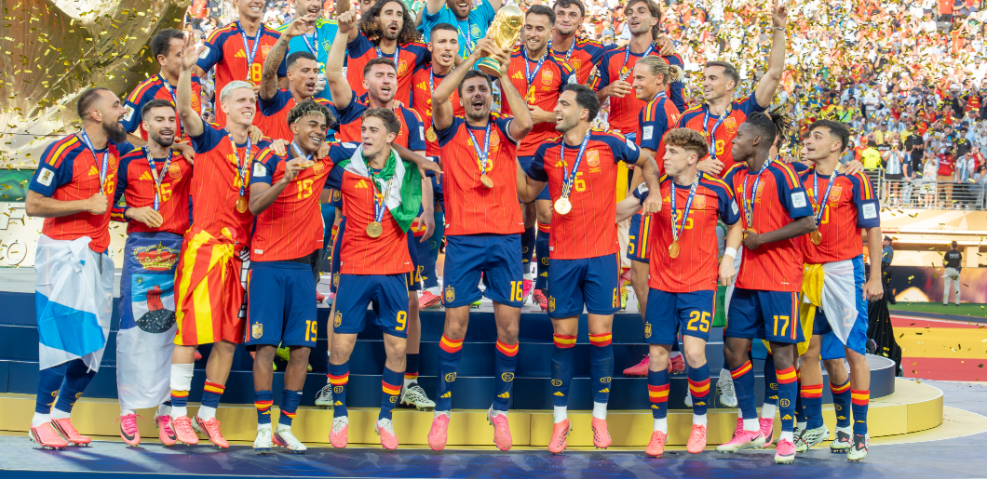
 On the evening of July 19, 2026, Spain did not just win a football match; it redefined a generation. From Madrid to Bilbao, Valencia to Vigo, the country moved in unison as La Roja claimed their second FIFA World Cup title with a dramatic 1-0 extra‑time victory over Argentina at the New York New Jersey Stadium in East Rutherford. uefa
When the final whistle sounded on a humid New Jersey night, ending 120 minutes of tension with Spain on top, there was a split second of stunned silence before an eruption that seemed to travel from MetLife’s stands straight into the heart of every Spanish plaza. It was the sound of a nation releasing sixteen years of memories, expectations, and quiet doubts that had lingered since 2010. uefa
The Match That Changed Everything
The final itself was a tactical chess match, far tighter than the scoreline suggested. Spain, guided by Luis de la Fuente and captained by Rodri, stuck to their high‑energy, possession‑based pressing game against an Argentina side packed with individual brilliance and championship experience. uefa
Regulation time ended goalless, each team trading half‑chances and moments of danger without ever breaking through. Spain’s defensive organization—built on calm distribution from the back and a disciplined midfield block—limited Argentina largely to speculative efforts and fast breaks that never quite turned into clear shots. uefa
The decisive moment finally arrived in extra time. In the 106th minute, Nico Williams burst into space down the flank and cut the ball back into the box, where Ferran Torres timed his run to perfection and swept home the only goal of the match. As the ball hit the net and the stadium lights caught Spanish flags whipping in the air, the narrative of the tournament crystallized: Spain, European champions in 2024, had completed the double and reclaimed the summit of world football. uefa
A Country United in Red and Yellow
Back home, the atmosphere was as intense as anything in New Jersey. In Madrid’s Plaza de Cibeles, tens of thousands packed shoulder to shoulder, transforming the square into a living tapestry of red and yellow. Phone screens flickered like constellations, flares painted the night sky, and spontaneous chants rolled over the crowd every time a replay of Torres’s goal appeared on giant public screens. iz
For many, this triumph felt different from 2010. That first title had crowned a golden era built on the intricate passing of Xavi, Iniesta, and their peers; 2026, by contrast, belonged to a squad that blended technical quality with relentless pressing, vertical runs, and youth‑driven fearlessness. People who had grown up in the shadow of Messi and Ronaldo now sang the names of Rodri, Williams, Torres, and a new wave that had carried Spain past Austria, Portugal, Belgium, France, and finally Argentina. uefa
Emotional Echoes of 2010
“I cried,” says Elena, a 24‑year‑old university student in Valencia, recalling how she watched the final surrounded by friends and strangers in a packed bar. Though her earliest memory of Spain’s 2010 win is a hazy childhood image of adults shouting at a television, this time she understood every tactical twist and emotional turn. The victory did not feel like a simple repeat of past glory, but evidence that Spain had managed to reinvent itself without losing its soul.
The weight of beating Argentina added another layer of significance. The South American champions arrived in the final having defeated England in their own semi‑final, and the showdown at New York New Jersey Stadium was framed as a clash between two modern powers shaped by very different footballing cultures. Spanish fans argued late into the night about de la Fuente’s decision‑making, Rodri’s composure, and the maturity of a midfield that stayed calm even as Argentine attacks surged in the closing minutes of normal time. uefa
The Morning After: A New Era
By the time the sun rose over Spain on July 20, the nation was still suspended in celebration. Many offices opened with half‑full staff, and delivery vans carried newspapers whose front pages shouted a simple, definitive message: “CAMPEONES DEL MUNDO.” Copies disappeared from kiosks within hours, tucked away as keepsakes alongside old clippings from 2010. iz
In Barcelona’s cafés and Madrid’s tapas bars, conversations shifted from politics and the economy to pressing schemes, defensive lines, and the significance of the 106th‑minute goal that would now be replayed for years to come. The result felt bigger than sport: a point of common pride in a country often marked by regional differences, proof that Spain could again be the standard‑bearer for footballing excellence on the global stage. uefa
Visualizing the Celebration
If you were to walk through Spain’s streets in those hours after the final, the scenes would have looked something like this:
- The Plaza de Cibeles: An aerial night shot revealing a dense crowd turned into a glowing mosaic of jerseys, flags, and phone flashlights, all pulsing to the rhythm of improvised songs about Torres’s goal and Rodri’s leadership.
- The Iconic Embrace: A close‑up from the pitch in New Jersey, capturing the Spanish captain collapsing to his knees as teammates swarm Ferran Torres, while Argentine players stand in the background, heads bowed, absorbing the finality of the defeat. iz
- The Streets of Madrid: A wide‑angle view down Gran Vía, showing cars immobilized under waves of supporters, flags streaming from balconies, and people dancing atop buses and benches as if the avenue itself had turned into one long celebration.
- Generational Joy: A quieter shot in a living room somewhere in Seville—an elderly grandfather in a faded 2010 jersey holding a child in a brand‑new 2026 kit, both gazing at a replay of the winning goal, sharing tears that bridge sixteen years of Spanish football history.
Together, these images tell the story of a night when the streets seemed to stand still, time folded back on itself, and Spain once again stood at the very top of the world. uefa