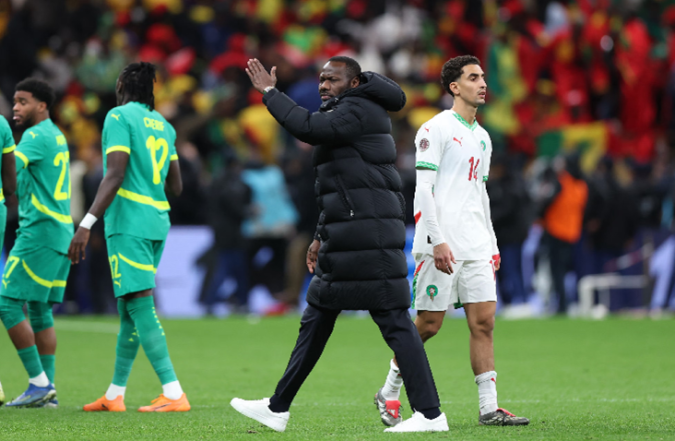
The Africa Cup of Nations 2025, hosted by Morocco, sparked an extraordinary wave of national pride and excitement across the country. The Atlas Lions arrived as one of Africa’s highest-ranked teams, strengthened by a remarkable group of players performing at the highest levels in Europe’s top leagues—stars whose club form promised so much on the international stage. For the first time in nearly half a century since their 1976 triumph, the entire nation allowed itself to genuinely believe that the continental crown could finally be claimed on home soil, in front of passionate, roaring crowds. Yet, in a final against Senegal that stretched into extra time and ended 1-0 after a dramatic and controversial 90 minutes, that deep-seated hope slipped away painfully. Pape Gueye’s early extra-time strike proved decisive, leaving head coach Walid Regragui—still remembered fondly for masterminding Morocco’s historic semi-final run at the 2022 World Cup—facing sharp questions and growing scrutiny from fans, media, and analysts alike.
What Stands Out First When a Talented Home Team Underperforms?
When you look back at a talented team that falls short despite having both exceptional individual quality and the powerful boost of playing at home, what element catches your eye right away? Many observers highlighted the growing issue of tactical predictability as a central thread running through the tournament. Regragui’s system, which had worked so well in earlier competitions and carried echoes of the World Cup success, started to feel familiar to opponents as the matches progressed. Rival teams increasingly read Morocco’s movements, packing the central channels to block the usual pathways and pushing the Atlas Lions toward the flanks or into speculative long-range efforts that rarely troubled the goalkeeper. In that tense final, Morocco controlled periods of possession and created moments of promise, but Senegal’s deep, disciplined, and compact shape repeatedly frustrated those efforts. If an opponent’s plan successfully shuts down your main attacking threats, what options do you think a coach should consider to break the deadlock? Does this pattern make you wonder how much tactical flexibility is truly needed, even when a system has proven itself before?
The Tension Between Tactical Identity and Match Adaptation
The conversation around substitutions grew particularly heated after the final. Some changes came later than many felt was ideal, while others appeared to disrupt the team’s rhythm rather than inject fresh energy or new ideas. Across social media, supporters voiced their disappointment, often describing the performance as lacking flow from the very beginning—almost as though the side was missing a crucial layer of adaptability or quick thinking on the pitch. What insights do you draw from this about the challenging balance every coach must strike: remaining loyal to a philosophy that has brought success in the past, versus being willing to evolve and adjust in real time as the game unfolds? At what point, in your view, does steadfast commitment to a familiar approach cross into dangerous rigidity, and how might a coach better judge that tipping point during high-pressure moments?
How Tactical Decisions Shape the Quality of Chances
Finishing and the ability to convert opportunities formed another critical piece of the puzzle. Across the tournament, Morocco consistently built promising attacks and carved out good positions, yet the goals arrived far less frequently than the volume of chances might have suggested. Coach Regragui openly acknowledged this gap afterward, pointing out that despite generating a respectable number of opportunities, the team struggled to turn them into actual scores. The final brought a heartbreaking example: a late penalty offered what seemed like the perfect chance to snatch victory in regulation time, but Brahim Díaz’s hesitant Panenka attempt was comfortably saved, igniting widespread discussion about both the technique chosen and the decision to take it. Data such as expected goals (xG) from the knockout rounds told a similar story—clear openings were there, but conversion suffered from choices like low-percentage shots from distance, insufficient bodies arriving in the penalty area from midfield, or difficulty breaking down tightly organized defenses. How do you see tactical decisions influencing not only how many chances a team creates, but also the true quality, variety, and likelihood of those chances leading to goals? Might subtle shifts in player movement, positioning, passing patterns, or attacking tempo have helped make those key moments more decisive?
Expectations at Play: Motivation or Restraint?
Expectations hung heavily over the entire campaign, adding layers of meaning far beyond the scoreboard. Regragui’s personal story—from growing up as the son of Moroccan immigrants in France to becoming a national symbol and hero—gave the tournament a profound emotional and cultural resonance
. He presented it as more than just a competition; it was framed as a historic national mission, an opportunity to deliver the glory that had eluded Morocco for so long and to unite a country in celebration. This passion galvanized millions of supporters, yet it also placed an enormous burden on the players and staff. Regragui spoke honestly about feeling that weight, noting that anything less than a dominant performance might be viewed as falling short by many. Does intense external and internal pressure tend to heighten concentration and drive, or can it sometimes lead to caution, hesitation, and a fear of making mistakes? Some watchers sensed a certain tentativeness in crucial phases, perhaps connected to the emphasis Regragui placed on humility and keeping egos grounded. How do you think a coach can carefully walk that line—encouraging grounded realism while still unlocking the bold, fearless style needed when every moment feels like it carries the weight of a nation’s dreams?
The Role of Fitness, Selection, and Proactive Squad Management
Player fitness and selection decisions introduced yet another layer of difficulty. A number of important squad members arrived at the tournament dealing with minor injuries or incomplete recovery periods, forcing tough calls about who should start and who should be rested or used sparingly. In a fast-paced, physically demanding competition with little time between games, even small dips in sharpness or endurance can accumulate and affect performance over multiple matches. Observers pointed to cases where fielding players who were not fully fit may have restricted the quality and depth available on the bench, especially during extra time or when the team desperately needed an injection of pace and intensity. The final offered a stark reminder of the risks involved when substitute Hamza Igamane suffered a serious knee injury almost immediately after coming on. While injuries can never be fully predicted, what importance do you place on proactive planning around player readiness—through careful rotation, medical monitoring, and contingency thinking—in maintaining both tactical options and long-term team resilience?
Cultivating Mental Fortitude in the Face of Adversity
Moving beyond pure tactics and squad choices, the mental side of the game deserves close attention. Players who regularly compete at elite club level should, in principle, be well equipped to handle pressure and deliver in big moments. Still, when events began to drift away from the expected script—missed chances, controversial decisions, mounting frustration—visible signs of hesitation and uncertainty appeared at times. Regragui later reflected on the harsh, fine-margin nature of football, yet others suggested that building unbreakable self-belief, particularly when facing setbacks, is one of a coach’s most important responsibilities. How might a leader go about instilling that kind of mental strength so that early disappointments or difficult periods do not spiral into bigger problems? What specific approaches, conversations, or team practices do you think could help players stay composed and focused even when the momentum seems to turn against them?
What True Accountability Looks Like After Disappointment
In the days following the defeat, Regragui took full responsibility in a transparent and dignified way—a gesture that won admiration from some even as it intensified calls from others for fresh leadership or structural changes. He firmly rejected any talk of outside interference or conspiracies, choosing instead to concentrate on the factors within the team’s control. When a major disappointment occurs, what does genuine accountability mean to you in practice? Is it primarily about open, honest self-examination and learning from mistakes, or does it sometimes require immediate, visible shifts in personnel or approach—or perhaps a thoughtful combination of the two? How can leaders and teams channel intense public scrutiny and emotion into meaningful, positive development rather than division?
Lessons from Disappointment: Building Resilience for Future Triumphs
In the end, Morocco’s 2025 campaign did not unravel because of a single glaring mistake, but rather through a complex mix of tactical inflexibility at key moments, struggles to finish promising chances, the immense psychological load of towering expectations, difficulties in managing squad fitness and depth, and occasional dips in composure under pressure. Regragui’s overall record and contributions remain impressive and historic, yet carrying World Cup-level magic forward into sustained continental success requires ongoing evolution and the ability to adapt to different kinds of challenges. What broader lessons do you think this experience holds for coaches, players, and teams that find themselves under similar levels of anticipation and hope? In what ways can the pain of coming so close—yet falling short—be transformed into a powerful source of motivation and growth, laying stronger groundwork for eventual success? What small but intentional changes in mindset, preparation, or strategy might help turn those near-misses into lasting achievement the next time around?