As the cycling world turns its gaze toward spring, one date stands out: April 12, 2026. Why does that single Sunday carry such weight? Consider the Paris–Roubaix, the 123rd edition of the legendary “Hell of the North,” and often called the Queen of the Classics. The route, revealed in February, stretches 258.3 km from Compiègne to the Roubaix velodrome, with 30 sectors of pavé totaling 54.8 km of unforgiving cobbles. Organizers have reshaped the early kilometers, linking five opening sectors in rapid succession with scarcely any smooth road between them. What might that density mean for a peloton whose legs are still warming up? Could the race ignite far earlier than riders expect, forcing decisions before anyone is truly ready?The Countdown to the Hell of the North
Why the Cobbles Make Roubaix Unique
What makes this one-day battle stand apart as cycling’s most punishing test, even without the longest distance or towering mountains? Reflect on the cobbles themselves—jagged, uneven farm tracks, some laid during Napoleon’s era. The vibration affects riders relentlessly. Power data from professionals reveals they must sustain 350–450 watts on five-star sectors like Trouée d’Arenberg, Mons-en-Pévèle, and Carrefour de l’Arbre simply to hold speed while bodies and bikes shudder. Specialized 28–32 mm tires at low pressures (4–5 bar), wider rims, and frames designed to dampen shock offer some relief, yet nothing eliminates the toll. Hands numb, blisters rise, lower backs lock. Tom Boonen, after securing his fourth victory, captured it vividly: “After 50 km of cobbles your arms feel like they’ve been through a meat grinder. The pain doesn’t stop—it just becomes background noise.” How does that constant punishment compare to the recoverable suffering of a mountain stage in the Tour de France?
Numbers underscore the race’s cruelty. In wet years, finish rates plummet; historical records show 2002 with only 41 of 190 starters reaching Roubaix. Even in dry conditions, mechanicals and crashes often outweigh raw power. A misjudged line at 60 km/h in the 2.4 km Trouée d’Arenberg—a straight, forested arrow—can end a campaign instantly. Positioning matters enormously in a 175-rider field, yet maintaining it perfectly proves elusive. Riders expend early energy to stay forward, only to suffer later. Fabian Cancellara once contrasted it sharply: “The Tour is three weeks of pain you can manage. Roubaix is six hours of pain you cannot escape.” Where else does the road refuse to grant even momentary respite?
ModeLuck plays an outsized role, elevating the challenge further. The strongest rider can fall victim to a puncture or a crash ahead. Mathieu van der Poel, fresh from his third consecutive victory in 2025 (a solo masterclass where he outlasted a pursuing Tadej Pogačar despite the Slovenian’s crash and puncture), acknowledged this truth after his 2024 triumph: “I felt good, but honestly? I also got lucky. In Roubaix you need both.” Now chasing a fourth win to match legends Roger De Vlaeminck and Tom Boonen, van der Poel faces renewed pressure. Pogačar, second on his 2025 debut, has confirmed Paris–Roubaix as a prime target for 2026, even reconnoitering sectors like Carrefour de l’Arbre in winter. What happens when two such forces collide on these stones?
“After 50 km of cobbles your arms feel like they’ve been through a meat grinder. The pain doesn’t stop—it just becomes background noise.”
Veteran directeur sportif Wilfried Peeters captured the purist view: “It’s the last race where pure strength, courage and a bit of madness still matter more than data and marginal gains.” Critics note that specialized Roubaix bikes, tire-pressure tools, and handlebar experiments have tamed it slightly, yet the record average speed remains below 46 km/h (Greg Van Avermaet, 2017), dipping under 42 km/h in harsh conditions. For spectators, the drama endures—the velodrome finale after 250+ km of torment produces eternal images: Museeuw’s bloodied face, Sagan’s solo charge, van der Poel’s dominance. Crowds pack the sectors ten-deep, flags waving, beer flowing, an atmosphere unmatched.A Race Defined by Attrition. Statistics underline the cruelty of Roubaix. In wet years, finish rates collapse. Historical records show that in 2002 only 41 of 190 starters completed the race.
A Race Defined by Attrition
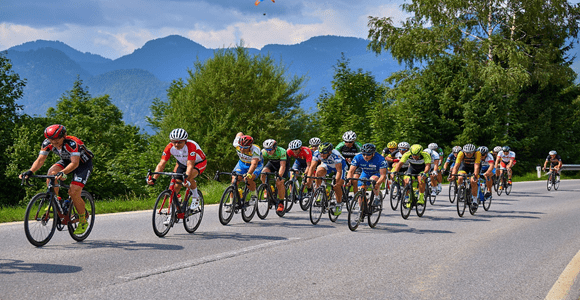
Even under dry conditions, where the roads are less treacherous, crashes and mechanical failures often have a greater impact on the outcome than raw power alone. On the cobbles of Trouée d’Arenberg, a 2.4-km straight through dense forest, a single misjudged line at speeds approaching 60 km/h can instantly dash a contender’s hopes, leaving no room for recovery. In such a packed 175-rider peloton, positioning becomes an art as much as a science; riders expend huge amounts of energy fighting for the ideal spot near the front, knowing that even minor mistakes can cascade into costly gaps later in the race. The relentless combination of speed, cobbles, and jostling requires constant attention, and early efforts to maintain position often drain reserves needed for the decisive final sectors. As Fabian Cancellara famously remarked, “The Tour is three weeks of pain you can manage. Roubaix is six hours of pain you cannot escape,” perfectly capturing the unrelenting intensity and unforgiving nature of this legendary classic
“The Tour is three weeks of pain you can manage. Roubaix is six hours of pain you cannot escape.”
Luck, Legends, and the Van der Poel–Pogačar Rivalry
In Paris–Roubaix, luck often weighs as heavily as strength in determining the outcome. Even the strongest rider can be undone by a puncture, a crash ahead, or a poorly timed mechanical, leaving months of preparation hanging by a thread. After securing his third consecutive victory in 2025, Mathieu van der Poel acknowledged the role of fortune in his success:
“I felt good, but honestly? I also got lucky. In Roubaix you need both.”
Now chasing a fourth triumph to join the ranks of legends Roger De Vlaeminck and Tom Boonen, van der Poel faces immense pressure. Adding to the intrigue, Tadej Pogačar, who finished second on his 2025 debut, has already targeted Roubaix for 2026, meticulously scouting key sectors over the winter to prepare for the challenge. The stage is set for a dramatic showdown: when two of cycling’s most explosive talents collide on the roughest terrain in the sport, every decision, line choice, and burst of power could determine who survives the Hell of the North and who is left behind.
Route Tweaks That Could Change the Race
Race organizers have made subtle but significant tweaks to the Paris–Roubaix route, designed to ratchet up pressure from the very start. According to Thierry Gouvenou, linking several early sectors near Briastre could spark decisive moves much sooner than riders typically expect, forcing teams to commit to aggressive tactics while legs are still fresh.
Adding further complexity, the course now features an 800-meter climbing sector, introducing another tactical challenge that could influence early selections and energy management. Yet, despite careful planning, the single greatest variable remains the weather. Rain can turn the cobbles into slick, greasy hazards, dramatically increasing the power required just to maintain speed and magnifying the risk of crashes. The mud-soaked 2021 edition demonstrated the brutal consequences: only 54 riders finished that year. And yet, it is precisely this unpredictability and apparent unfairness that fans and purists revere, celebrating Roubaix as cycling in its rawest, most elemental form.
Why Purists Still Love Roubaix
Veteran directeur sportif Wilfried Peeters once captured the enduring allure of Paris–Roubaix:
“It’s the last race where pure strength, courage and a bit of madness still matter more than data and marginal gains.”
While technology has somewhat softened Roubaix’s brutality—through specialized bikes, advanced tire-pressure systems, and innovative handlebar setups—its essence remains unchanged. Even the fastest edition still averages below 46 km/h, the record set by Greg Van Avermaet in 2017, and in harsh conditions, speeds can fall well under 42 km/h. For fans, the spectacle is unforgettable. The drama of the velodrome finish, the mud-streaked champions, and iconic moments—Johan Museeuw bloodied but triumphant, Peter Sagan launching a solo attack, or Mathieu van der Poel dominating the cobbles—ensures that Roubaix remains a race like no other, combining raw suffering with spectacular heroics.
How to Watch Paris–Roubaix Like an Insider
To truly grasp the intensity of Paris–Roubaix, it helps to focus on its decisive sectors. The Trouée d’Arenberg frequently triggers the first significant splits in the peloton, separating the strongest from the rest. Mid-race, Mons-en-Pévèle acts as a key selector, while Carrefour de l’Arbre delivers the final, punishing test before the riders reach Roubaix.
Pay attention to the 400-watt power spikes on the toughest cobbled stretches—these bursts of effort often define who survives and who fades. Weather adds another layer of unpredictability; rain can turn even familiar sectors into treacherous, slippery obstacles, completely reshaping the race.
For those seeking the ultimate perspective, experiencing the cobbles firsthand via the Paris–Roubaix Challenge the day before the professional race offers unmatched insight into the pain, skill, and strategy required to conquer the Hell of the North.
Cycling’s Most Beautiful Brutality
In an era where cycling is increasingly defined by data, power meters, and meticulously managed strategies, Paris–Roubaix continues to stand out as gloriously unpredictable. It rewards riders who take risks, punishes even the slightest hesitation, and reminds fans why the sport can feel so raw, visceral, and deeply human. On these centuries-old cobbles, a single puncture, a slip, or a fleeting moment of doubt can obliterate a season’s ambitions in an instant. The stakes are immense, and the consequences are immediate and unforgiving.
Come April 12, 2026, the cycling world will once again pause for the Hell of the North. Few races demand so much from riders—both physically and mentally—yet deliver drama and beauty in equal measure. What combination of strength, strategy, and fortune do you think will decide this year’s edition?