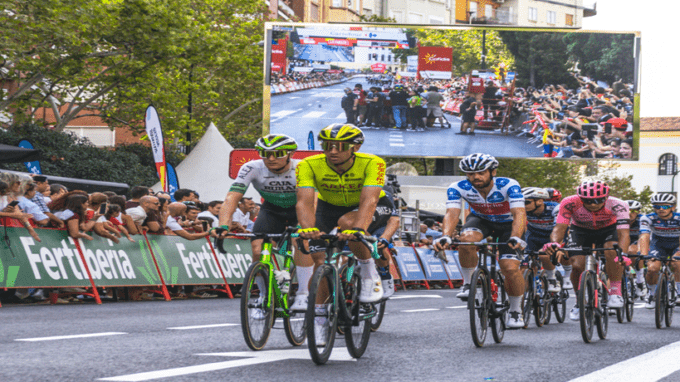
The **Tour of Flanders**, known locally as **De Ronde van Vlaanderen** or simply **”De Ronde”**, stands as one of the most prestigious and fiercely contested one-day races in professional cycling. As the second Monument of the season after Milan-San Remo, it embodies the soul of Flemish cycling culture. Held every spring on the narrow, cobbled roads of East Flanders, this brutal classic delivers raw passion, tactical brilliance, and legendary suffering that has captivated fans for over a century.
A Historic Monument
First organized in 1913 by the sports newspaper *Sportwereld*, the inaugural edition covered a demanding 324 km and was won by Belgian rider **Paul Deman**. The race was created to boost newspaper sales and quickly became a cornerstone of Flemish identity. It survived two World Wars (with editions held under difficult conditions in the 1940s) and has grown into one of the five Monuments of Cycling alongside Milan-San Remo, Paris-Roubaix, Liège-Bastogne-Liège, and the Giro di Lombardia.
As of 2026, the race has reached its **110th edition**. Belgium dominates the honour roll with **69 victories**, showcasing the deep-rooted passion for the sport in the region. The race distance now typically sits around 270-280 km, featuring a relentless combination of short, steep climbs (known as *hellingen*) and punishing cobbled sectors.
The Brutal Route: Cobbles and Climbs
What makes the Tour of Flanders unique is its demanding terrain. Unlike the long, flat cobbles of Paris-Roubaix, De Ronde mixes steep hills with irregular cobblestones, creating a race of attrition and explosive attacks.
Key iconic climbs include:
– **Oude Kwaremont** — The strategic heart of the modern race. At 2.2 km long with sections reaching 11% gradient, it is often where favourites launch decisive moves. It is usually climbed multiple times in the finale.
– **Paterberg** — Short (360m) but brutally steep with gradients up to 20%. Its cobbled surface tests power and bike-handling skills.
– **Koppenberg** — The most feared climb. Only 600m long but with maximum gradients of 22% on poorly maintained, narrow cobbles. Crashes and walking are common here.
– Other legendary sectors: Taaienberg, Eikenberg, Molenberg, and the flat cobbled roads like the Paddestraat.
The modern route typically starts in Antwerp (or nearby) and finishes in **Oudenaarde**, with the final 70-80 km featuring repeated loops over the most decisive hills. This structure creates high drama as riders battle fatigue, positioning, and mechanical issues on the unforgiving roads.
Legendary Riders and Record Holders
Several riders have etched their names into De Ronde folklore with multiple victories. Seven riders share the record of **three wins** each:
– **Achiel Buysse** (Belgium)
– **Fiorenzo Magni** (Italy) — The only rider to win three consecutive editions (1949-1951)
– **Eric Leman** (Belgium)
– **Johan Museeuw** (Belgium) — “The Lion of Flanders”
– **Tom Boonen** (Belgium)
– **Fabian Cancellara** (Switzerland)
– **Mathieu van der Poel** (Netherlands)
– **Tadej Pogačar** (Slovenia) — Joined the elite club with his third victory in 2026
**Tadej Pogačar** most recently defended his title in 2026 with a dominant solo performance, further cementing his status as one of the greatest riders of his generation. Belgian icons like **Rik Van Looy**, **Eddy Merckx**, and **Briek Schotte** also delivered unforgettable performances that still resonate today.
The race has produced dramatic stories: from Magni’s long solo breaks in the post-war era to Museeuw’s heroic comebacks, and more recently, the intense rivalries between riders like van der Poel, Wout van Aert, and Pogačar.
Iconic Moments and Drama
The Tour of Flanders has delivered countless unforgettable chapters. In 2010, Fabian Cancellara and Tom Boonen dueled in a legendary two-man break. In 2020, Mathieu van der Poel outsprinted Wout van Aert in a photo-finish after an epic battle. Pogačar’s solo victories in recent years have showcased raw power and tactical intelligence.
The race is famous for its unpredictability — crashes, punctures, and tactical masterstrokes often decide the outcome in the final 30 kilometres. Riding in the rainbow jersey as World Champion adds extra prestige, with several riders achieving this feat, including Merckx, Boonen, Sagan, van der Poel, and Pogačar.
Cultural Significance
For the people of Flanders, De Ronde is more than a bike race — it is a cultural institution. Hundreds of thousands line the roads, creating a carnival atmosphere with beer, frites, and passionate support. The event brings the region together and attracts global attention. The women’s edition, first held in 2004, has also grown rapidly in prestige, with stars like Lotte Kopecky delivering dominant performances in recent years.
Why It Remains Special
The Tour of Flanders endures because it rewards a unique combination of qualities: explosive power, endurance, bike-handling skills on treacherous cobbles, tactical cunning, and sheer mental toughness. It strips riders down to their core, exposing both their physical limits and their fighting spirit.
In an era of increasingly predictable Grand Tours, De Ronde offers pure, unfiltered drama. Every attack on the Kwaremont, every slip on the Koppenberg, and every sprint in Oudenaarde writes another chapter in cycling’s richest history.
Whether you’re a die-hard fan cheering from the roadside or watching from afar, the Tour of Flanders delivers an experience unlike any other in sport: raw, emotional, and deeply human.
More than 110 years after its humble beginnings, De Ronde continues to prove why it is called **”Flanders’ Finest”** — a true Monument that captures the essence of cycling’s heroic age while remaining thrillingly relevant today.