Introduction: Modern Marksman vs. Legendary Prototypes
Harry Kane is football’s archetype of contemporary elite striking: clinical, intelligent, and ruthlessly consistent. Where icons like Maradona dazzled with improvisation and individual flair, Kane combines elite finishing, positional intelligence, and data-backed consistency shaped by modern coaching, sport science, and tactical specialization. He matured in an era of advanced analytics, thorough scouting, and optimized physical preparation, yet his achievements—Golden Boots, domestic and international scoring records, and a remarkable ability to adapt his game—place him among the era’s definitive forwards. This profile traces his timeline: working-class beginnings, steady technical and tactical growth, club and international milestones, and a legacy anchored in record-breaking output and analytic excellence.
Early Life: Chingford Roots, Family, and a Footballing Pathway
Harry Edward Kane was born on July 28, 1993, in Walthamstow, London, and raised in Chingford in a close-knit family with sporting interests. The son of working-class parents, Kane’s early years combined local grassroots football and structured academy entry. He joined Ridgeway Rovers before entering Tottenham Hotspur’s youth system, while also spending time on loan at Arsenal’s Hale End and later with local amateur setups.
Kane’s development benefited from Britain’s modern academy infrastructure: coaching curricula, technical drills, and early exposure to tactical teaching. He honed finishing, movement off the ball, and aerial technique on grass pitches and artificial surfaces, while incremental fitness work and later sports science guidance refined his explosiveness and durability. Unlike street-born legends of prior eras, Kane’s pathway blended neighborhood grassroots with a systematic youth-to-pro model.
Youth Development and Professional Debut: Gradual Ascent
Kane rose through Tottenham’s academy and took the loan route common for modern English prospects. Between 2011 and 2014 he had loan spells at Leyton Orient, Millwall, Norwich City, and Leicester City—each offering regular senior minutes and varied tactical teachings that broadened his game. He made his competitive breakthrough for Tottenham in the 2014–15 season, establishing himself as the club’s number nine.
Kane’s early senior seasons revealed an advanced finishing repertoire—powerful shots, clinical headers, and composed penalties—along with intelligent positioning and a capacity to link play. Analytics tracked his expected goals (xG) being consistently high and his finishing rate beating xG benchmarks, signaling both high-quality chances and elite composure. He married goal volume with playmaking growth, proving more than a pure poacher.
Tottenham Breakthrough and Premier League Stardom
From 2014 onward, Kane became Tottenham Hotspur’s central figure. He won multiple Premier League Golden Boots, recording high single-season tallies and delivering consistent 20+ goal campaigns. His 2017–18 season combined league-leading goals with expanded playmaking: he registered one of the highest assist totals among strikers while also contributing progressive carries and passes that fit Mauricio Pochettino’s pressing, high-line system.
Kane’s modern strengths include: clinical finishing inside and outside the box, intelligent deep-lying link-up where he drops to create overloads, aerial threat on set pieces, and pressing work rate. Advanced metrics—goals per 90, shot-creating actions, and non-penalty xG—placed him among Europe’s top forwards. Injuries and dense fixture lists tested his durability, but sport science and rotation strategies helped him sustain elite output.
Tottenham, International Offers, and a Strategic Move
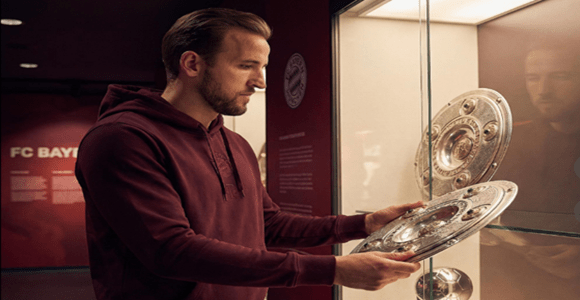
Kane’s loyalty to Tottenham was notable, though persistent conversations about transfer moves and squad ambitions shaped public debate. In 2023 he completed a high-profile transfer to Bayern Munich, a move that fit the modern player-market model: elite striker sought by continental power, adapting to a team with dominant possession, rotational demands, and a strong supporting cast. At Bayern he maintained high scoring rates and diversified his attacking contributions, proving his ability to translate performance across top leagues and tactical systems.
International Stardom: England’s Captain and Record-Holder
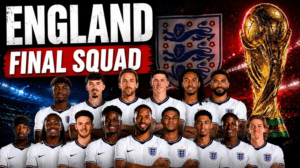
Kane debuted for England in 2015 and rapidly became the national team’s focal point. He captained England at major tournaments, most notably Euro 2020 (played 2021), where he finished as top scorer and led England to the final. At the 2018 World Cup he won the Golden Boot, and across tournaments he demonstrated clinical tournament finishing, penalty reliability, and leadership under pressure.
By 2026 Kane sits among England’s all-time top scorers—holding or challenging national scoring records—and his tournament goal tallies emphasize his consistency on the biggest stages. Analytics underline his clutch scoring: high goals-per-90 in knockout matches and a steady penalty conversion rate, combined with tactical adaptability when required to drop deeper to link play.
Later Career: Evolution, Longevity, and Tactical Intelligence
Across club changes and advancing age, Kane evolved from an orthodox number nine into a multifunctional forward—capable of playing as a target man, a false nine, or a deeper playmaker. His passing accuracy in the final third increased; progressive passes and through-balls became meaningful parts of his contribution. He kept a notable penalty and late-game composure, while refining recovery routines (load management, personalized conditioning) typical of elite modern players.
Injuries and the high physical demands of top-level football influenced minutes management, but modern medical support and analytics-guided training extended Kane’s peak. He also invested in off-field professionalism—nutrition, movement coaching, and video analysis—mirroring trends in contemporary elite athlete upkeep.
Post-Playing Prospects, Coaching, and Influence
Kane’s projected post-playing pathways lean toward coaching, sporting-director roles, punditry, or youth development, given his tactical intelligence and leadership. He has also shown interest in mentoring young English talent and contributing to community programs. His career offers a template for modern strikers: blend of finishing, playmaking, and data-literate preparation.
Legacy: Records, Analytics, and Why Kane Defines the Modern Striker
Kane’s career totals (club and country through 2026) include multiple domestic top-scorer awards, high single-season goal tallies in the Premier League and Bundesliga, and a growing list of international scoring records. Where older legends were judged by singular genius moments or transformative flair, Kane’s legacy is built on replication—sustained, measurable excellence across seasons, leagues, and tournaments.
Compared with historic greats, Kane benefits from modern systems: targeted coaching, performance analytics (xG, expected assists), and sports medicine, but his finishing efficiency, positional intelligence, and adaptability show that elite instinct still matters. He can change matches with a single touch or shift the whole attack by dropping deep and creating overloads—an evolution of the striker’s role tuned to modern tactics.
His story—from local youth team to global elite, underpinned by methodical improvement and a data-backed determination—embodies football’s contemporary professional ideal. Harry Kane is not a mythic, untouchable genius of folklore; he is the refined product of talent plus modern science, a forward whose records and analytics-backed impact will be studied by coaches and scouts for years.