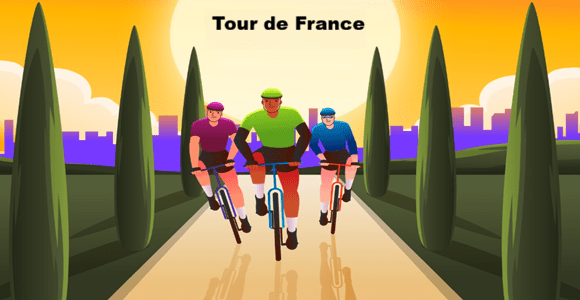
**As the calendar turns to **March 4, 2026**, the cycling world is gripped by a single, electrifying countdown: the **113th Tour de France**, set to begin on **July 4** and conclude in Paris on **July 26**. Covering **3,333 kilometers** with a staggering **54,450 meters of elevation gain**, this edition promises a race that builds from the first pedal stroke to a brutal, Alpine crescendo. Kicking off with a **Grand Départ in Barcelona, Spain**, the 2026 Tour signals a bold departure from tradition—merging Mediterranean flair with Pyrenean and Alpine drama.
The Route: A Symphony of Strategy and Suffering
Race director **Christian Prudhomme** has crafted a **21‑stage** odyssey that expertly balances flat sprints, hilly transitional efforts, and the decisive mountain blocks. The route features **7 flat stages**, **4 hilly stages**, **8 mountain stages** (including **5 summit finishes**), **1 team time trial**, **1 individual time trial**, and **two rest days** for recovery. Ten stage towns appear for the first time, adding tactical uncertainty while preserving the Tour’s iconic landscapes. The journey sweeps from **Catalonia** through the **Pyrenees**, then across the **Massif Central**, **Jura**, and **Vosges**, before the brutal Alps decide the yellow jersey. The final stage in Paris introduces **Montmartre’s cobbles**, a twist that could shatter the peloton on the Champs‑Élysées.
Barcelona’s Grand Départ: A Hybrid Test of Power
Stage 1 on **July 4** sets the narrative: a **19.7 km team time trial** starting and finishing in **Barcelona**, with a twist borrowed from **Paris‑Nice 2023**. **Individual times count**, rewarding GC contenders who excels in solo or small‑group efforts, while team cohesion rewards giants like **UAE Team Emirates** or **Visma | Lease a Bike**. The finish on **Montjuïc’s Olympic terrain**—featuring the **Montserrat climb** and **Gaudí’s Sagrada Família**—favors punchy climbers, potentially handing the first yellow jersey bonuses. Stages 2 and 3 (Tarragona to Barcelona, ~178 km; Granollers to Les Angles, 196 km) keep the race in Spain, offering sprinters like **Jasper Philipsen** or **Tim Merlier** early chances, while the Les Angles descent hints at Pyrenean altitude.
The Pyrenees: Early Crucibles of Form
The **Pyrenees** strike fast on **Stage 6**, with **Pau to Gavarnie‑Gèdre** (18.7 km at ~4% grade) delivering the first summit finish at the **UNESCO‑listed Cirque de Gavarnie**, a Tour record in 2007. Long and steady, it tests early form without the Galibier’s savagery, as the route snakes through **Luz‑Saint‑Sauveur** and **Aubisque** before **Tarbes** on Stage 7. Flat stages through **Bordeaux** and **Bergerac** (Stages 4‑5) let sprinters shine, but the **Pyrenees crescendo** from **Oloron‑Sainte‑Marie** to **Gavarnie** sets GC contenders apart—poor pacing here could doom chances by the Alps. The **54,450 meters** of elevation favor lightweight climbers sustaining **6+ W/kg** on Strava or TrainingPeaks.
The French Heartland: Ramping the Intensity
The **Massif Central** (Stages 8‑10) builds tension with **Toulouse to Millau**’s rolling hills and **Millau to Aurillac**’s climbs like **Naucelle** (7.5%). The **Jura** (Stages 11‑12) introduces **Lyon** and **Besançon**, featuring **Col de la Colombière** (5.8%) and **Plateau de Somport** (6.5%). The **Vosges** (Stage 13) tackle **Col du Donon** (6.5%) from **Strasbourg** to **Colmar**. Key **summit finishes** loom: **Plateau de Solaison** (Stage 14, 6.5%), **Orcières‑Merlette** (Stage 15, 6.5%), and the **Alpe d’Huez** double (Stages 18‑19, 9.5%). The **Queen Stage 20** likely from **Le Bourg d’Oisans to Alpe d’Huez** (~171 km) features **Croix de Fer**, **Télégraphe**, **Galibier**, and **Alpe via Col de Sarenne**, a rare twist that could shatter GC hopes—analytics favor sustained climbers like **Pogačar** or **Vingegaard**.
The Favourites: Masters of the Mountains
The spotlight centers on a familiar trio. **Tadej Pogačar (UAE Team Emirates)** enters as the **overwhelming favorite**, chasing a record‑equaling **fifth yellow jersey** after dominating 2025 with **Giro**, **Tour**, and **Vuelta** wins. His all‑terrain mastery—sprinting, climbing, time‑trialing—suits punchy finishes like **Montjuïc** or the **Alpe** double. **Jonas Vingegaard (Visma | Lease a Bike)**, the only rider to beat Pogačar twice (2021, 2023), remains chief rival, his pure climbing strength shining on **Galibier** or **Croix de Fer**, though recovery from injuries is critical. **Remco Evenepoel (Red Bull‑Bora‑Hansgrohe)**, world champion, adds firepower—his time‑trial prowess could net early TTT and ITT seconds. Rising stars like **Juan Ayuso** or **Oscar Onley** threaten podiums, while sprinters target flats and puncheurs the hilly stages.
How to Gear Up: Engaging with the Race
Follow official sources—download the **route PDF** from **letour.fr** for profiles; track via the **Tour app** for live timing, power data, and highlights. Analyze key metrics—use **Strava** or **TrainingPeaks** to compare rider FTPs and W/kg, focusing on **Gavarnie**’s early test and **Alpe**’s decisive gradients. Watch build‑up—monitor **spring classics** and **Critérium du Dauphiné** for form; pundits on **Eurosport** or **Cyclingnews** break down scenarios. Plan viewing—prioritize **Stage 1 TTT**, **Stage 6 summit**, and the **Alpine block (Stages 18‑20)**. Bracket challenges on fantasy apps add engagement. Experience virtually—ride **Alpe d’Huez** on **Zwift** to feel the 9.5% sting. With Barcelona’s vibrant start and a brutal Alpine finale, the 2026 Tour promises fireworks—expect **Pogačar** to set the pace, but drama always lurks in cycling’s greatest race.






For most recent information you have to pay a visit web and on internet I found this web page as a best website for latest updates.
I am truly grateful to the owner of this web site who has shared this wonderful piece
of writing at here.