As March 4, 2026 arrives, Moroccan football turns once again toward one of its most intense and culturally loaded fixtures: the Casablanca Derby between Raja Club Athletic and Wydad Athletic Club. More than a football match, it is a citywide event that divides neighborhoods, electrifies stadiums, and pulls the attention of an entire nation. With the latest meeting ending 0-0 in October 2025 and the return leg approaching in a tight title race, the derby now carries even more weight than usual.
A Rivalry Built On Identity
The Casablanca Derby is not only about trophies or league position. It is about identity, memory, and the social soul of Morocco’s largest city. Raja, founded in 1949, has long been associated with the energy of the people, with ultras culture, vocal support, and a reputation for defiance and collective pride. Wydad, founded in 1937, carries a more established and decorated image, with a history that includes royal backing and major continental success.
That contrast gives the rivalry its power. Every meeting between the two sides becomes a symbolic clash between two visions of Casablanca: green versus red, popular passion versus institutional prestige, street intensity versus historic weight. In a city where football is woven into daily life, the derby is not just watched — it is felt.
Historical Edge, Modern Balance
Over the years, Raja and Wydad have met well over 140 times in official competition, with Wydad holding a slight historical edge in wins. Yet history alone does not define the rivalry, because the recent trend has been much more balanced. Several of the latest derby meetings have ended level, including three straight league draws and the tense goalless match in October 2025.
That balance matters because it changes how supporters approach the game. Neither side can assume superiority, and both know that one moment can decide everything. In a rivalry like this, form can be misleading, because the derby often produces its own logic, separate from the rest of the season.
The October 2025 Stalemate
The previous league meeting at Stade Mohammed V was a perfect example of how tightly the derby is fought. The match ended 0-0, but the scoreline did not capture the drama around it. Raja controlled more of the ball, finishing with about 56 percent possession, while Wydad looked dangerous on the counter and forced the game into a tense tactical battle.
Smoke, flares, and crowd pressure briefly interrupted the rhythm of the contest, adding to the sense that this was a derby in the purest sense. Raja tried to impose themselves through possession and pressing, while Wydad stayed compact and looked for openings in transition. In the end, both sides left with a point, but neither claimed emotional dominance.
Title Stakes Raise The Heat
What makes the upcoming derby even more significant is the league table. With Raja leading the Botola Pro Inwi and Wydad close behind, the result could shape the championship race as much as the city rivalry. This is the sort of derby that can affect not only bragging rights but also qualification for continental competition and the psychological balance of the season.
That is why every pass, tackle, and set piece feels bigger than normal. A win for Raja would strengthen their title position and reinforce their status as the city’s current standard-bearers. A Wydad victory would close the gap, silence the home crowd, and remind everyone that continental pedigree still counts for something when the pressure rises.
Raja’s Home Force
Raja’s greatest weapon is often the environment around them. Whether at Stade Mohammed V or another familiar setting, their supporters are capable of producing one of the loudest and most intimidating atmospheres in African football. The Green Boys and other ultras groups build a visual and emotional wall of noise that can lift the team and unsettle opponents.
On the pitch, Raja usually look to dominate possession, press aggressively, and play with tempo. That style can be very effective in derbies, especially when they are able to turn crowd energy into momentum. The problem is that Wydad are experienced enough to resist pressure and wait for the right moment to strike.
Wydad’s Grit And Big-Game DNA
Wydad enter the derby with a different kind of confidence. Their history in Moroccan and African football gives them a strong sense of composure in high-pressure matches. With multiple CAF Champions League titles, including their most recent triumph in 2022, they know what it takes to survive tense environments and deliver when expectations are high.
Their style often leans toward structure, discipline, and transition play. In derby conditions, that can be extremely effective. If Raja are the team that tries to impose rhythm, Wydad are the side most comfortable disrupting it, absorbing pressure, and punishing mistakes.
Tactical Patterns To Watch
Recent Casablanca derbies have tended to be low scoring, tightly contested, and physically demanding. Under 2.5 goals is a common pattern, and cards are usually frequent because neither side is willing to give the other easy space. Set pieces can become decisive, especially when open-play chances are limited by the emotional tension of the occasion.
From an analytical point of view, this is a matchup of styles. Raja generally aim for control, pressing, and ball retention, while Wydad are more dangerous when the game stretches and transitions appear. That contrast makes the derby difficult to predict, because the winner is often the team that adapts first rather than the team with the better pure form.
Players Who Can Decide It
Individual quality matters enormously in a derby like this. For Raja, pace, dribbling, and creativity in the final third are often what unlock a compact Wydad defense. A player capable of beating a man or taking a chance from distance can change the atmosphere instantly.
For Wydad, the midfield and forward lines are equally important. A strong engine in the center, backed by a clinical finisher, gives them the tools to survive pressure and convert limited chances. Experienced players with derby know-how can be especially valuable, because this is not a match for hesitation.
The Power Of The Crowd
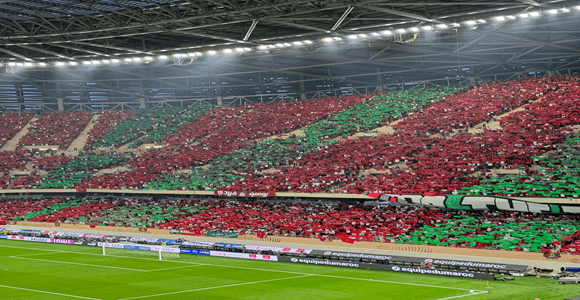
Few African fixtures can match the visual and emotional intensity of the Casablanca Derby. Tickets disappear quickly, chants echo for hours, and fan culture turns the day into a citywide event. Ultras groups prepare tifos, banners, and choreography that often circulate widely online, helping the derby reach audiences far beyond Morocco.
That crowd factor is not just aesthetic. It can influence tempo, referee decisions, and momentum. Teams that stay calm under that pressure usually have a better chance of controlling the match, but calm is difficult to maintain when every touch is amplified by 50,000 people reacting together.
Why Neutral Fans Care
The derby’s appeal extends far beyond Casablanca because it represents everything that makes football powerful. It combines local pride, competitive drama, tactical uncertainty, and emotional investment in a way that few matches can. For many neutral observers, it is one of the most compelling rivalries in African football precisely because it feels authentic rather than manufactured.
The match also carries symbolic importance for Moroccan football as a whole. When Raja and Wydad meet at full intensity, the game showcases the depth of support, culture, and passion that exists in the domestic league. That is one reason the derby is often placed among the world’s most passionate local rivalries.
A Match That Defines A City
Whether the next meeting ends in a Raja celebration, a Wydad response, or another tense draw, the Casablanca Derby will continue to define the football identity of the city. Its value lies not only in the result but in the ritual around it: the buildup, the arguments, the tifos, the tension, and the sense that ordinary life pauses for ninety minutes. Casablanca does not just host this derby. It lives through it. And when Raja and Wydad face each other, the city’s heartbeat becomes the rhythm of the match itself.