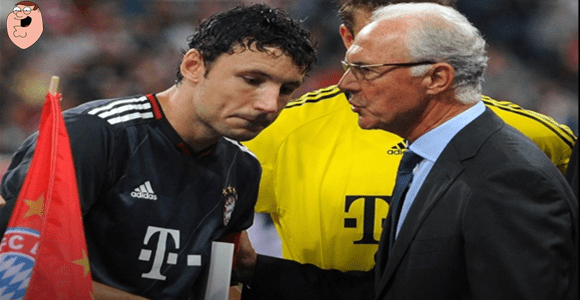
Introduction: Legendary Icon vs. Modern Stars
Franz Beckenbauer, affectionately known as “Der Kaiser” (The Emperor), redefined the art of defending and elevated football’s tactical beauty. The German maestro invented the modern *libero* (sweeper) role — a defender who reads the game, steps into midfield, and launches attacks with grace and precision. While today’s stars like Virgil van Dijk, Rúben Dias, or even midfield maestros such as Rodri dominate through athleticism, tactical discipline, and data analytics, Beckenbauer thrived on intelligence, composure, and leadership in an era of harder pitches, stricter offside rules, and more physical challenges. He won the Ballon d’Or twice as a defender, captained West Germany to the 1974 World Cup, secured three consecutive European Cups with Bayern Munich, and later became one of only three men to win the World Cup as both player and manager (1990). This post traces his remarkable timeline: postwar beginnings, rapid growth, dominant professional career, and timeless legacy.
**Early Life: Postwar Munich and a Working-Class Passion**
Franz Anton Beckenbauer was born on September 11, 1945, in Munich, Germany, in the working-class district of Giesing, just months after the end of World War II. The second son of a postal worker, he grew up amid the city’s reconstruction. Football offered joy and escape in a modest environment.
Initially a fan of local rivals 1860 Munich, young Franz joined SC Munich ’06 at age nine. He played street football and honed his skills on rough surfaces, developing exceptional balance and vision. Unlike modern academy prospects benefiting from elite facilities and early specialization, Beckenbauer’s early years emphasized raw creativity and resilience. At 14, he switched to Bayern Munich’s youth setup in 1959 — a club then in the regional leagues and far from its future powerhouse status.
**Youth Development and First-Team Breakthrough: From Midfielder to Visionary Defender**
Beckenbauer progressed quickly through Bayern’s ranks. He made his senior debut in 1964 at age 18–19 and helped the club gain promotion to the newly formed Bundesliga. Initially playing as a midfielder, he soon transitioned into defense, experimenting with a more proactive sweeper role under coaches who allowed positional freedom.
His elegant style — upright posture, precise passing, and calm authority — stood out immediately. By the mid-1960s, Beckenbauer was anchoring Bayern’s rise. In the 1965–66 season, he scored four goals in the Bundesliga, showcasing his attacking instincts from deep. This period marked his growth from promising talent to national team contender, debuting for West Germany in 1965.
Modern defenders often rely on high pressing and recovery pace; Beckenbauer revolutionized the position through anticipation and ball-playing ability, turning defense into the first phase of attack.
**Bayern Munich Dominance: Building a Dynasty**
Beckenbauer became Bayern’s heartbeat. As captain from 1971, he led the club to four Bundesliga titles (1969, 1972–74), four DFB-Pokal wins, the 1967 European Cup Winners’ Cup, and a historic hat-trick of European Cups (1974–76). In 427 Bundesliga appearances for Bayern (first spell), he scored 60 goals — remarkable for a defender.
His partnership with the likes of Gerd Müller and Sepp Maier created one of Europe’s most feared teams. Beckenbauer’s ability to stride out from the back, evade markers, and deliver pinpoint long passes dismantled opponents. Bayern’s European triumphs against teams like Atlético Madrid, Leeds United, and Saint-Étienne showcased his leadership under pressure.
Unlike today’s stars frequently moving for new contracts and challenges, Beckenbauer’s loyalty helped transform Bayern from regional underdogs into a continental giant.
**International Stardom: World Cup Campaigns and the 1974 Triumph**
Beckenbauer debuted internationally at 20 and quickly became indispensable. He starred in the 1966 World Cup final (runner-up to England), the 1970 World Cup (third place, featuring the epic semi-final against Italy), and captained the side to European Championship glory in 1972.
The pinnacle arrived at the 1974 FIFA World Cup on home soil. As captain, Beckenbauer orchestrated a composed campaign. West Germany overcame a group-stage loss to East Germany, defeated Poland in the semi-finals, and beat Johan Cruyff’s Netherlands 2–1 in the final. Beckenbauer lifted the trophy, embodying tactical intelligence and resilience. He earned 103 caps and scored 14 goals for West Germany.
His performances in an era without modern substitutions or VAR highlighted mental strength and composure — qualities that still define elite leadership.
**Later Club Career: New Horizons and Final Flourish**
In 1977, at age 31, Beckenbauer joined the New York Cosmos in the NASL, teaming up with Pelé. He won titles in 1977 and 1980, scoring 17 goals in 80 appearances and helping popularize soccer in the United States. A brief return to Hamburger SV (1980–82) yielded another Bundesliga title in 1982. He finished his playing days back with the Cosmos in 1983.
Across his club career, he accumulated over 560 league appearances and 79 goals, with far more honors in cups and internationals. His later years demonstrated adaptability and a willingness to embrace new challenges.
**Post-Playing Career: Managerial Success and Administrative Influence**
Retiring in 1984, Beckenbauer seamlessly moved into coaching. He managed West Germany to the 1986 World Cup final and victory in 1990 — becoming one of only three to win the tournament as player and manager (with Zagallo and Deschamps). He later coached Bayern Munich and Olympique Marseille, winning domestic titles.
As Bayern president and honorary president, he shaped the club’s modern success. He played a key role in Germany’s hosting of the 2006 World Cup. Though later controversies emerged regarding FIFA matters, his footballing contributions remain monumental.
**Legacy: Why Beckenbauer Transcends Current Stars**
Beckenbauer won two Ballon d’Or awards (1972, 1976) — the only defender to do so twice — multiple Bundesliga titles, three European Cups, the 1972 Euros, and the 1974 World Cup. He is one of ten players to win the World Cup, European Cup, and Ballon d’Or.
His invention of the attacking *libero* influenced generations, from modern ball-playing centre-backs to tactical systems emphasizing build-up from the back. In today’s game of high-intensity pressing and positional play, his principles of spatial awareness, composure under pressure, and leadership endure.
Compared to current stars: Van Dijk’s dominance or elite midfielders’ vision echo Beckenbauer, yet few match his dual impact as player and coach, or his elegance in a physically demanding era without today’s recovery science or squad depth. He operated with fewer protections and greater tactical freedom.
Beckenbauer passed away on January 7, 2024, at age 78, leaving an unmatched legacy of class, innovation, and success. Der Kaiser didn’t just play football — he commanded and redefined it. His influence remains woven into the modern game’s fabric, proving that true greatness lies in intelligence and vision as much as athletic prowess.