Introduction: Legendary Icon vs. Modern Stars
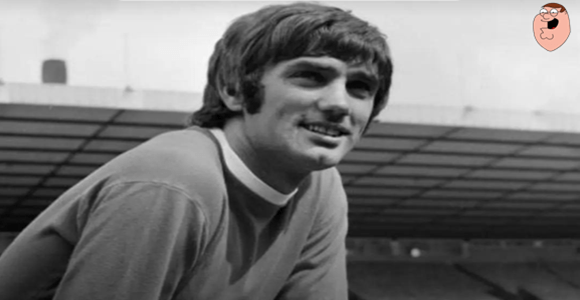
George Best remains one of football’s most dazzling and complex figures — a mercurial winger whose breathtaking skill, balance, and audacity made him a global superstar in the 1960s. The Northern Irishman combined Pelé-like flair with Beatles-level celebrity. While today’s stars like Neymar, Vinícius Júnior, or Mohamed Salah mesmerize with pace, dribbling, and athleticism supported by sports science, multimillion-pound contracts, and tactical systems, Best operated in a raw, physical era of heavy pitches, minimal protection, and intense media scrutiny. He won the Ballon d’Or in 1968, helped Manchester United claim the European Cup, and scored 179 goals in 470 appearances for the club. This post traces his timeline: Belfast beginnings, meteoric rise, peak professional career, later wanderings, and enduring legacy as one of the game’s purest entertainers.
**Early Life: Belfast Roots and a Prodigious Talent**
George Best was born on May 22, 1946, in Belfast, Northern Ireland, into a working-class Protestant family. The eldest of six children, he grew up in the Cregagh estate during a time of economic hardship. His father, Dickie, was a shipyard worker and keen footballer who encouraged his son’s passion.
Best showed extraordinary talent from a young age, playing street football and for local boys’ clubs. He was rejected by local side Glentoran for being “too small and light,” a setback that only fueled his determination. At age 15, Manchester United scout Bob Bishop spotted him in Belfast and famously telegraphed manager Matt Busby: “I think I’ve found you a genius.” Best joined United’s youth setup in 1961, though homesickness saw him briefly return home after just two days.
Unlike modern academy stars with tailored nutrition and psychological support, Best’s early growth relied on natural ability, street cunning, and raw hunger. His slight frame concealed explosive acceleration, close control, and ambidexterity that would soon terrorize defenders.
**Youth Development and First-Team Arrival: The Busby Babe Emerges**
Best thrived in United’s youth ranks alongside talents like David Sadler. He made his senior debut on September 14, 1963, at age 17 against West Bromwich Albion, helping secure a 1–0 victory. Initially a fringe player, he broke through during the 1964–65 season.
By 1965–66, Best was a first-team regular in the “Holy Trinity” alongside Denis Law and Bobby Charlton. His growth was explosive: dazzling dribbles, feints, step-overs, and goals from impossible angles. The Portuguese press dubbed him “O Quinto Beatle” (The Fifth Beatle) after a memorable European Cup display against Benfica in 1966. Fame arrived rapidly, bringing both adoration and pressure in an era when footballers were transitioning into pop-culture icons.
**Peak at Manchester United: European Glory and Ballon d’Or**
The 1967–68 season marked Best’s zenith. United won the First Division in 1965 and 1967, with Best as a driving force. In the 1968 European Cup final at Wembley against Benfica, the 22-year-old delivered a masterclass. He scored the vital second goal with a trademark surging run and cool finish, helping United become the first English club to lift the trophy (4–1 after extra time).
That year, Best won the Ballon d’Or as Europe’s finest player and the FWA Footballer of the Year. In 470 appearances for United (1963–1974), he scored 179 goals, often from the wing or as a creative forward. He was the club’s top league scorer for five consecutive seasons. His style — beating multiple defenders, scoring with both feet, heading despite his height, and unmatched balance — made him nearly unplayable.
Best’s charisma off the pitch amplified his legend. With his looks, fashion sense, and nightlife, he embodied the Swinging Sixties. Yet the physical demands of the era — fewer substitutions, tougher challenges — tested even his extraordinary gifts.
**International Career: Northern Ireland’s Lone Genius**
Best earned 37 caps for Northern Ireland between 1964 and 1977, scoring 9 goals. Despite the team’s limited resources and failure to qualify for major tournaments during his prime, he produced moments of magic. His debut came in 1964, and standout performances included a goal against England and a memorable display against Scotland.
Limited by Northern Ireland’s smaller talent pool and his own club commitments, Best never graced a World Cup or European Championship. Many regard this as one of football’s great “what ifs.” In an era without today’s international friendlies or expanded tournaments, his international impact was constrained but still highlighted his genius.
**Challenges, Decline at United, and Departure**
The years after 1968 brought growing off-field distractions. Best’s hedonistic lifestyle — women, nightclubs, and later alcohol — clashed with the demands of elite football. Injuries mounted, and his relationship with manager Matt Busby strained. By the early 1970s, despite flashes of brilliance (including memorable solo goals), inconsistency grew.
He played his final game for United in 1974 at age 27–28, having scored 178 league goals in 466 games. The club and fans mourned the premature end of a prodigious talent. Best cited burnout and personal struggles as reasons for his exit.
**Later Career Wanderings: Global Journeys and Fleeting Magic**
Post-United, Best’s career became nomadic. Brief spells included Stockport County, Cork Celtic, and a notable stint with the Los Angeles Aztecs in the NASL (alongside Pelé and Beckenbauer), where he showcased skill and boosted American soccer. He also played for Fulham (reuniting with Bobby Charlton briefly), Hibernian, San Jose Earthquakes, and others.
In these later years, glimpses of the old genius remained, but fitness and discipline waned. He retired fully in the mid-1980s after short stints in Australia and elsewhere. His club career totals reached around 616 appearances and 204 goals across all teams.
**Personal Struggles and Later Life**
Best’s battles with alcoholism became public and tragic. He underwent liver surgery and was candid about his issues in interviews and his autobiography *Blessed*. Despite this, he remained a beloved figure and pundit. George Best died on November 25, 2005, at age 59 from complications related to liver disease. His funeral in Belfast drew massive crowds, reflecting his enduring popularity.
**Legacy: Why George Best Transcends Current Stars**
George Best won two English league titles, the European Cup, the Ballon d’Or (1968), and remains Manchester United’s fifth-highest all-time goalscorer. Pelé called him one of the greatest ever. He finished fifth in the FIFA Player of the Century poll.
Compared to modern wingers: Salah’s consistency or Vinícius’s flair draw comparisons, yet Best’s era offered less protection, poorer pitches, and no tactical luxury of inverted roles or heavy pressing support. He invented moves and entertained purely on instinct and joy. His story embodies football’s duality — sublime talent intertwined with human frailty.
In an age of athlete branding and longevity science, Best reminds us of raw, unfiltered genius. “Maradona good, Pelé better, George Best” — the old chant captures it. He wasn’t just a player; he was football as performance art, beautiful and fleeting. The Belfast Boy’s magic still captivates, proving that true legends are measured not only in trophies but in hearts captured and imaginations ignited.