Introduction: Legendary Icon vs. Modern Managers
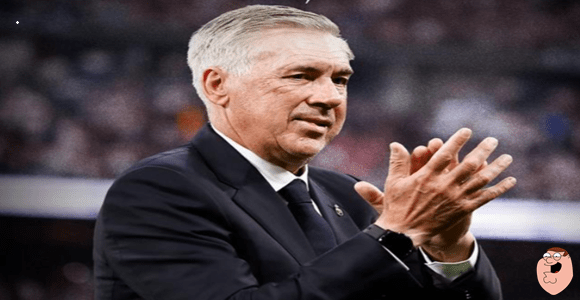
Carlo Ancelotti is widely regarded as one of the greatest football managers of all time and the most successful in UEFA Champions League history. Nicknamed “Carletto,” the Italian embodies calm authority, tactical flexibility, player psychology, and a gentlemanly demeanor that contrasts with more fiery counterparts. While modern managers like Pep Guardiola revolutionize styles with high-pressing and data analytics, or Jürgen Klopp inspires through intense emotion, Ancelotti wins through adaptability, squad harmony, and big-game management in an era of superstar egos and financial disparity. He is the only coach to win league titles in all of Europe’s top five leagues and holds a record five Champions League titles (two with Milan, three with Real Madrid). As a player, he contributed to Milan’s late-1980s glory. This post traces his timeline: humble Italian roots, solid playing career, rapid coaching ascent, club triumphs, international move, and an immortal legacy.
**Early Life: Reggiolo, Family Farm, and a Passion for the Game**
Carlo Ancelotti was born on June 10, 1959, in Reggiolo, a small town in Emilia-Romagna, Italy. He grew up on a family farm, the son of a farmer and a housewife. Football was a passion from an early age, played on local pitches amid rural life. Unlike many modern coaches from urban or privileged backgrounds, Ancelotti’s upbringing instilled humility, work ethic, and resilience.
He joined local club Reggiolo’s youth setup before moving to Parma in 1975. These formative years shaped a balanced personality — calm under pressure — that later defined his managerial approach. Education and family values remained important alongside his football dreams.
**Playing Career: Midfield General at Parma, Roma, and Milan**
Ancelotti made his professional debut with Parma in Serie C in 1976. He moved to Roma in 1979, where he won a Serie A title in 1983 and multiple Coppa Italia trophies. As a deep-lying midfielder with excellent vision and passing range, he excelled in control and leadership.
In 1987, he transferred to AC Milan, becoming a key player in Arrigo Sacchi’s revolutionary team. He won two Serie A titles (1988, 1992), two European Cups (1989, 1990), and two Intercontinental Cups. Injuries, including a serious knee issue, limited him somewhat, but he contributed to Milan’s transformation into a European powerhouse. He earned 26 caps for Italy, appearing in the 1986 and 1990 World Cups. Ancelotti retired in 1992 after 338 league appearances and 35 goals.
His playing experience under Sacchi provided deep tactical insight that fueled his coaching philosophy.
**Early Coaching Steps: Assistant Roles and First Head Jobs**
Ancelotti began coaching immediately after retiring, serving as assistant to Sacchi with the Italy national team (reaching the 1994 World Cup final). His first head coaching role came at Reggiana in 1995, securing promotion to Serie A. He then managed Parma (1996–1998), reaching the Coppa Italia final and UEFA Cup semi-final.
In 1999, he joined Juventus but faced a difficult period without major silverware. These early experiences taught him squad building and pressure management before his breakthrough.
**AC Milan Glory: Champions League Success and Tactical Evolution**
Ancelotti returned to Milan as manager in 2001. He transformed the club into a European force, winning the 2003 Champions League (beating Juventus on penalties) and the 2007 edition (2–1 vs Liverpool in Athens). He secured one Serie A title and multiple domestic cups. Stars like Pirlo, Maldini, Shevchenko, and Kaká thrived under his balanced, player-friendly system that blended defense with creative attack.
His Milan sides were known for elegance and resilience, showcasing his ability to maximize talent without authoritarian extremes.
**Chelsea, PSG, and European Expansion**
In 2009, Ancelotti joined Chelsea, winning the Premier League and FA Cup in his first season (the Double). He later managed Paris Saint-Germain (2011–2013), securing a Ligue 1 title. These moves proved his adaptability across cultures and leagues.
**Real Madrid First Spell: La Décima and Record Points**
Appointed by Real Madrid in 2013, Ancelotti delivered “La Décima” — the club’s 10th Champions League — in 2014 with a 4–1 extra-time win over Atlético Madrid. He also won the Copa del Rey and reached record 100+ La Liga points in one season. His calm handling of Galácticos like Ronaldo, Benzema, and Modrić was masterful.
**Bayern Munich, Napoli, Everton: Completing the Top-Five Leagues**
At Bayern Munich (2016–2017), he won the Bundesliga. With Napoli (2018–2019), he secured silverware. His Everton spell (2019–2021) showed his man-management in tougher environments. These roles made him the only manager to win league titles in England, Spain, Italy, France, and Germany.
**Real Madrid Return: Further Champions League Triumphs**
Re-appointed in 2021, Ancelotti led Madrid to more glory: Champions League titles in 2022 and 2024, multiple La Liga, Copa del Rey, Super Cups, Club World Cups, and the 2024 Intercontinental Cup. By 2025, he had amassed 15 trophies in two spells, becoming the club’s most decorated manager. His teams produced epic comebacks and fluid attacking football.
**Move to Brazil National Team: New Chapter (2025 Onwards)**
In 2025, Ancelotti was appointed Brazil manager on a lucrative deal, preparing the Seleção for the 2026 World Cup. This marks his first full national team role, bringing vast experience to one of football’s most storied nations.
**Tactical Philosophy and Man-Management**
Ancelotti favors flexible 4-3-3 or 4-4-2 formations, emphasizing balance, quick transitions, and player freedom within structure. He excels at managing superstar personalities through trust and calm communication, fostering loyalty across diverse squads. His “quiet leadership” contrasts with more confrontational styles.
**Legacy: Why Ancelotti Transcends Modern Managers**
Ancelotti has won over 30–36 major trophies, including a record 5 Champions Leagues, multiple league titles across Europe, and numerous supercups and Club World Cups. He is one of few to win the European Cup/Champions League as both player and manager.
Compared to contemporaries: Guardiola’s innovation or Mourinho’s intensity stand out, yet Ancelotti’s versatility, longevity, and consistent success with varying resources and cultures set him apart. In an era of tactical dogma and short tenures, his adaptability and trophy haul remain unmatched.
Carlo Ancelotti rose from a rural Italian farm to become football’s most decorated Champions League coach. His journey — marked by elegance, resilience, and quiet excellence — proves that calm intelligence can conquer chaos. From Milan’s glory nights to Madrid’s multiple crowns and Brazil’s future, “Carletto” remains the ultimate modern football statesman. His legacy as a winner, mentor, and gentleman endures.