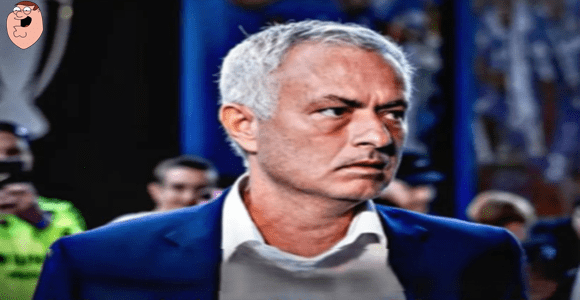
Introduction: Legendary Icon vs. Modern Managers
José Mourinho, famously self-proclaimed as “The Special One,” is one of football’s most polarizing, successful, and charismatic managers. Known for his tactical organization, man-management brilliance, defensive solidity, and counter-attacking prowess, he has won major trophies in four different countries and lifted the Champions League with two clubs. While today’s elite coaches like Pep Guardiola emphasize possession and high pressing with vast resources and data analytics, Mourinho built his reputation on pragmatic, result-driven football, psychological motivation, and creating unbreakable team spirit in an era of intense media scrutiny and rising player power. From humble Portuguese beginnings to conquering Europe, his career blends triumph, controversy, and enduring influence. This post traces his timeline: Setúbal roots, early coaching path, rapid ascent, major club tenures, and a legacy as one of the game’s most decorated leaders.
**Early Life: Setúbal, Football Family, and Academic Drive**
José Mário dos Santos Mourinho Félix was born on January 26, 1963, in Setúbal, Portugal, into a middle-class family with deep football ties. His father, Félix Mourinho, was a professional goalkeeper who later became a coach, and his mother, Maria Júlia, was a teacher from a prominent local family. Young José grew up surrounded by the game but was encouraged toward education.
He played as a midfielder at lower levels (Rio Ave, Belenenses, Sesimbra) but recognized his limitations in pace and talent. Instead of pursuing a top playing career, he studied sports science and worked as a physical education teacher while obtaining coaching badges in England and Scotland. This academic and observational foundation shaped his analytical approach to the game.
**Entry into Coaching: Translator to Assistant Under Legends**
Mourinho’s big break came in 1992 when he became interpreter and assistant to Sir Bobby Robson at Sporting CP. The relationship continued when Robson moved to Porto and then Barcelona. At Barça, Mourinho also worked under Louis van Gaal, absorbing high-level tactical knowledge, training methodologies, and leadership.
These years were formative. He studied opponents meticulously, focused on details, and developed a deep understanding of dressing-room psychology. By the late 1990s, he was ready for his own managerial opportunities.
**First Steps: Benfica, União de Leiria, and the Porto Breakthrough**
Mourinho’s senior managerial debut came at Benfica in 2000, though it was brief (nine matches). He then excelled at União de Leiria in 2001–02, impressing with organized, competitive football.
In 2002, he returned to Porto. Over two-and-a-half seasons, he transformed the club: two Primeira Liga titles, a Taça de Portugal, a UEFA Cup (2003), and the crowning glory — the 2004 UEFA Champions League, defeating Monaco in the final. Porto’s victory over elite sides showcased his pragmatic style: disciplined defense, clinical transitions, and motivated players punching above their weight.
**Chelsea: Premier League Arrival and Immediate Success**
In 2004, Mourinho joined Chelsea, backed by Roman Abramovich’s investment. He instantly delivered: back-to-back Premier League titles (2004–05, 2005–06), an FA Cup, and two League Cups. His “park the bus” reputation grew alongside a formidable defensive record and stars like John Terry, Frank Lampard, and Didier Drogba. The first spell ended in 2007 amid tensions, but he had established Chelsea as a dominant force and himself as a Premier League icon.
**Inter Milan: The 2010 Treble and Champions League Glory**
Mourinho moved to Inter in 2008. In two seasons, he won two Serie A titles, a Coppa Italia, and the 2009–10 treble — capped by a Champions League final victory over Bayern Munich. The campaign featured legendary defensive organization and stars like Javier Zanetti, Wesley Sneijder, and Samuel Eto’o. This made him one of the few to win the Champions League with two different clubs.
**Real Madrid: La Liga Record and El Clásico Battles**
In 2010, he joined Real Madrid, tasked with ending Barcelona’s dominance. He won the 2010–11 Copa del Rey, the 2011–12 La Liga title (with a record 100 points), and the 2012 Supercopa. Intense rivalries with Pep Guardiola’s Barça defined the era, producing memorable matches. Though the Champions League proved elusive, his tactical adaptability and motivation of players like Cristiano Ronaldo were evident.
**Return to Chelsea, Manchester United, and Tottenham**
Mourinho’s second Chelsea spell (2013–2015) brought another Premier League title and League Cup in 2014–15. At Manchester United (2016–2018), he won the Europa League, League Cup, and Community Shield. His Tottenham tenure (2019–2021) was less trophy-laden but showed flashes of his motivational skill.
**Roma and Later Career: Conference League Pioneer**
At Roma (2021–2024), he delivered the club’s first European trophy in decades — the 2021–22 UEFA Conference League — becoming the first manager to win major UEFA competitions with four different clubs. Brief spells at Fenerbahçe and a return to Benfica followed, maintaining his status as a sought-after leader.
**Tactical Philosophy, Man-Management, and Controversies**
Mourinho’s style evolved from rigid counter-attacking to flexible pragmatism, always prioritizing results and team cohesion. Famous for the “hairdryer” motivation, deep player loyalty, and mind games with rivals, he also faced criticism for defensive approaches and occasional conflicts with clubs, players, and officials. His media presence — charismatic, provocative, and quotable — amplified his “Special One” persona.
**Legacy: Why Mourinho Transcends Modern Managers**
Mourinho has won over 26 major trophies, including league titles in Portugal, England, Italy, and Spain, two Champions Leagues, two UEFA Cups/Europa Leagues, and the Conference League. He is one of only a handful to win the Champions League with two clubs and the only manager to secure all three major UEFA club competitions.
Compared to modern coaches: Guardiola’s stylistic dominance or Ancelotti’s calm longevity impress, yet few match Mourinho’s ability to win quickly at new clubs, overcome resource disadvantages, and build siege-mentality teams in multiple leagues. In an era of financial power and tactical sophistication, his psychological edge and trophy consistency stand out.
José Mourinho rose from translator and teacher to one of football’s most decorated and recognizable figures. From the streets of Setúbal to conquering Europe’s giants, he proved that charisma, tactical acumen, and unbreakable will can create dynasties. Controversial yet undeniably successful, The Special One’s impact on the beautiful game remains profound and unforgettable.