Introduction: Legendary Icon vs. Modern Stars
Ronaldo Luís Nazário de Lima, universally known as Ronaldo or “O Fenômeno” (The Phenomenon), redefined the centre-forward position with a terrifying blend of explosive pace, unmatched dribbling, power, balance, and clinical finishing. The Brazilian striker combined the raw athleticism of a sprinter with the skill of a playmaker, often leaving elite defenders helpless. While today’s stars like Erling Haaland, Kylian Mbappé, or Harry Kane benefit from advanced sports science, heavy squad rotation, and tactical systems that maximize their strengths, Ronaldo operated in a more physical, less forgiving era of man-marking and brutal challenges. He won two Ballon d’Or awards (1997, 2002), three FIFA World Player of the Year titles, two FIFA World Cups, and scored over 350 career goals despite devastating knee injuries that nearly ended his career multiple times. This post traces his timeline: humble Brazilian roots, meteoric rise, club triumphs and heartbreaks, international glory, and a legacy as one of football’s greatest strikers.
**Early Life: Bento Ribeiro, Poverty, and Street Football Dreams**
Ronaldo was born on September 18, 1976, in Bento Ribeiro, a working-class suburb of Rio de Janeiro, Brazil. The son of Nelio Nazário de Lima and Sônia dos Santos Barata, he grew up in modest conditions. His parents separated when he was young, and the family faced financial hardship. Football became his escape and obsession.
Young Ronaldo played futsal and street football with makeshift balls, developing extraordinary close control, low center of gravity, and explosive acceleration. He joined local clubs like Social Ramos and São Cristóvão before moving to Cruzeiro’s youth setup in 1992. Unlike modern prospects in elite academies with nutritionists and psychologists, Ronaldo’s early growth came from raw street talent, hunger, and natural athletic gifts. By his mid-teens, his prodigious scoring ability was evident.
**Youth Development and Cruzeiro Breakthrough: The Teen Phenomenon**
At Cruzeiro, Ronaldo exploded onto the scene. He made his senior debut in 1993 and scored prolifically in the Campeonato Mineiro. In 1994, still only 17, he netted 44 goals in 47 appearances across competitions, helping the club win the state championship. His combination of speed, power, and skill earned him a call-up to Brazil’s 1994 World Cup squad, though he did not play.
European scouts were already circling. In 1994, he transferred to PSV Eindhoven, beginning his European adventure as a teenager. This move marked his transition from Brazilian prodigy to global sensation.
**PSV Eindhoven: First European Explosion**
At PSV (1994–1996), Ronaldo adapted quickly to European football. In 46 league appearances, he scored 42 goals, winning the Eredivisie top scorer award and the KNVB Cup. His performances featured trademark step-overs, lightning runs, and clinical finishes. He scored 55 goals in 56 competitive matches across two seasons.
PSV showcased his frightening potential. At just 19–20 years old, he was breaking records and attracting world-record bids. The Dutch league provided a platform to refine his game against organized defenses.
**Barcelona: One Unforgettable Season of Magic**
In 1996, Ronaldo joined FC Barcelona for a world-record fee. His single season (1996–97) was spectacular: 34 league goals in 37 appearances, plus 47 goals in 49 games overall. He won the Copa del Rey, Spanish Super Cup, and UEFA Cup Winners’ Cup, scoring in the final. At age 20, he became the youngest-ever FIFA World Player of the Year and won the Ballon d’Or in 1997.
Barcelona fans witnessed dribbling masterclasses and goals that defied logic. His departure to Inter Milan for another record fee highlighted his meteoric status.
**Inter Milan: Il Fenomeno and the Agony of Injuries**
At Inter (1997–2002), Ronaldo continued dominating Serie A’s tough defenses. He scored 49 league goals in 68 appearances and helped reach cup finals. In 1998, he won another FIFA World Player award. However, serious knee injuries began to plague him. A 1999–2000 tendon rupture in his right knee kept him out for nearly two years.
His resilience shone through, but the physical toll was immense. In an era without today’s advanced surgery and recovery protocols, these setbacks tested his mental strength profoundly.
**1998 World Cup: Heartbreak and Golden Ball**
Ronaldo led Brazil to the 1998 World Cup final in France. Despite a mysterious convulsive fit hours before the match, he played but could not prevent a 3–0 loss to hosts France. He still earned the Golden Ball as the tournament’s best player.
**2002 World Cup Redemption: Phenomenal Comeback**
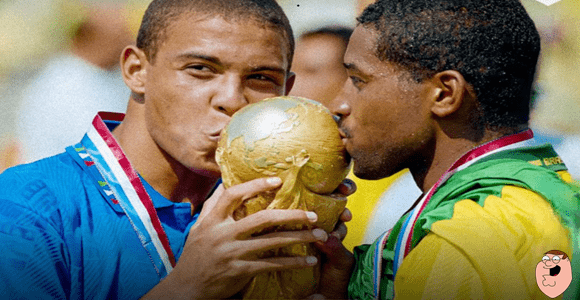
After years of rehabilitation, Ronaldo returned triumphantly at the 2002 World Cup in Korea/Japan. He scored eight goals, including two in the final against Germany, securing Brazil’s fifth title. Named Player of the Tournament and top scorer, he won his second Ballon d’Or that year. This comeback remains one of sport’s greatest redemption stories.
**Real Madrid: Galácticos Era and Continued Excellence**
In 2002, Ronaldo joined Real Madrid as part of the Galácticos. In 127 league appearances, he scored 83 goals, winning La Liga in 2003 and the Pichichi trophy. He formed a formidable attack with Zidane, Figo, and others, thrilling fans with his pace and power despite reduced explosiveness post-injuries.
**Later Career: Milan, Corinthians, and Retirement**
Brief spells at AC Milan (2007–08, 9 goals in 20 games) and a return to Brazil with Corinthians (29 goals in 52 league games) followed. He helped Corinthians win the Campeonato Paulista before retiring in 2011 at age 34 due to ongoing knee issues and weight management challenges.
**International Career Beyond World Cups**
Ronaldo earned 98 caps for Brazil, scoring 62 goals. He won two Copa América titles (1997, 1999), the 1997 Confederations Cup, and was part of the 1994 World Cup-winning squad as a teenager. His international record blends youthful promise with mature leadership.
**Legacy: Why Ronaldo Nazário Transcends Current Stars**
Ronaldo’s official club totals: 384 league appearances and 280 goals, with over 350 career goals overall. He is one of only a few players to win the Ballon d’Or twice after a major career-threatening injury. His influence on modern strikers — from Benzema to Haaland — is profound; he changed the dimension of the No. 9 role.
Compared to today’s forwards: Haaland’s finishing or Mbappé’s speed echo aspects of his game, yet few combined his explosive athleticism, dribbling in tight spaces, and big-game mentality in such a physically punishing era. Injuries robbed him of longevity, but his peak (roughly 1996–1999 and 2002) was arguably unmatched in pure striker excellence.
Ronaldo Nazário wasn’t just a goalscorer — he was a force of nature who overcame adversity with joy and determination. From the streets of Bento Ribeiro to World Cup glory and beyond, O Fenômeno illuminated football with moments of pure magic. His story reminds us that true greatness often shines brightest through resilience. The Phenomenon remains eternal.