Introduction: Legendary Icon vs. Modern Stars
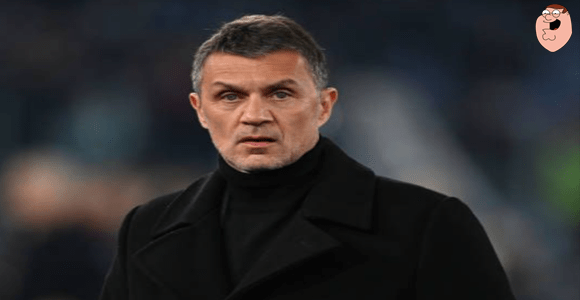
Paolo Maldini is universally acclaimed as one of the greatest defenders in football history — a player who elevated defending to an art form through intelligence, timing, positioning, and grace. The Italian spent his entire 25-season professional career at AC Milan, embodying loyalty and consistency in an era of increasing commercialization. While today’s stars like Virgil van Dijk, Trent Alexander-Arnold, or Rúben Dias excel with athleticism, progressive passing, and data-driven tactical roles, Maldini dominated through reading the game, clean tackling, and leadership with minimal fuss. He won five UEFA Champions League titles, seven Serie A crowns, and 26 major trophies with Milan, earned 126 caps for Italy, and played until age 41. This post traces his timeline: Milanese roots, swift rise, professional dominance, and a legacy of timeless class.
**Early Life: Football in the Blood and Milanese Pride**
Paolo Cesare Maldini was born on June 26, 1968, in Milan, Italy, into a football dynasty. His father, Cesare Maldini, was a respected AC Milan defender and later a successful coach for the club and Italy national team. Growing up near the San Siro, young Paolo was immersed in the Rossoneri culture from birth.
He played street football and joined AC Milan’s youth academy in 1978 at age 10 after impressing in trials. Unlike many modern prospects funneled through global scouting networks and elite academies with full-time support staff, Maldini’s early development blended family guidance, local passion, and Milan’s traditional emphasis on technique and discipline. His natural athleticism, composure, and tactical awareness emerged early, setting him apart as a versatile defender.
**Youth Development and First-Team Breakthrough: A Teenager in the First Team**
Maldini progressed rapidly through Milan’s youth ranks, winning the Coppa Italia Primavera in 1984–85. On January 20, 1985, at just 16 years and 208 days old, he made his Serie A debut as a substitute against Udinese in a 1–1 draw under manager Nils Liedholm. The following season, at 17, he became a regular starter, initially at right-back before settling primarily on the left.
Wearing the number 3 shirt — previously his father’s — Maldini adapted seamlessly to senior football. His calm demeanor under pressure and ability to read plays belied his youth. By the late 1980s, he was integral to Milan’s revival, helping the club win the 1987–88 Serie A title at age 19.
**The Sacchi Era and European Domination: Birth of an Icon**
The arrival of coach Arrigo Sacchi in 1987 ushered in Milan’s golden age. Maldini thrived in Sacchi’s revolutionary zonal pressing and high defensive line. Alongside Franco Baresi, Alessandro Costacurta, and Mauro Tassotti, he formed one of football’s greatest backlines.
Milan won back-to-back European Cups in 1989 and 1990, with Maldini starring in both finals. The team also secured multiple Serie A titles. Maldini’s performances combined attacking overlaps with rock-solid defending, showcasing elegance rarely seen in full-backs. He developed into a leader, maturing through high-stakes matches against the best European sides.
Unlike today’s specialized full-backs who prioritize crossing or inverted play, Maldini balanced attack and defense with impeccable timing, rarely needing reckless challenges.
**The Capello Years and Continued Supremacy**
Under Fabio Capello in the 1990s, Milan maintained dominance. Despite a brief transitional period, the club won Serie A titles in 1992, 1993, and 1994, plus another European Cup in 1994. Maldini captained the side from 1997 after Baresi’s retirement, inheriting the armband with natural authority.
He adapted brilliantly when shifting between left-back and centre-back roles, proving his football IQ. In an era of physical Serie A battles and top strikers like Marco van Basten (his teammate), Romário, and Batistuta, Maldini’s positioning and anticipation made him nearly impossible to beat one-on-one.
**International Career: Heartbreak and Leadership for Italy**
Maldini debuted for Italy in 1988 and earned 126 caps over 14 years, captaining the side for eight years. He participated in four World Cups (1990, 1994, 1998, 2002) and three European Championships. Highlights include third place in 1990, runner-up in 1994 (losing on penalties to Brazil), and runner-up at Euro 2000.
Though he never won a major international trophy — a notable void in an otherwise perfect career — Maldini’s leadership and consistency were exemplary. He played 2,217 minutes in World Cups, one of the highest totals ever. His 7 international goals included crucial contributions in qualifiers and tournaments.
**Later Career and Final Flourish: Defying Age**
Maldini’s longevity became legendary. Under Carlo Ancelotti in the 2000s, he helped Milan win the Champions League in 2003 (lifting the trophy like his father) and 2007, plus the 2007 Club World Cup. He formed strong partnerships with younger defenders and adapted to evolving tactical demands.
In 647 Serie A appearances (902 total competitive games for Milan), he scored 29 league goals. He retired on May 24, 2009, at age 41 after a final match against Roma, receiving a standing ovation. Milan retired his number 3 shirt in tribute.
**Playing Style and Personal Attributes**
Maldini was renowned for elegance, tactical intelligence, leadership, and sportsmanship. He rarely dove in, preferring to jockey and intercept. His ambidexterity, speed in his prime, and aerial ability (especially as a centre-back) completed the package. Off the pitch, he was professional and low-key, focusing on family and the club.
**Post-Playing Career and Legacy**
After retirement, Maldini served in various roles at Milan, including as a sporting director. His sons Christian and Daniel followed in his footsteps at the club. He remains a global symbol of class and dedication.
**Legacy: Why Maldini Transcends Current Stars**
Maldini won 5 Champions League titles, 7 Serie A titles, and numerous supercups across 26 major trophies. He is a FIFA 100 member, part of UEFA’s Team of the Century, and frequently tops all-time defender rankings.
Compared to modern defenders: Van Dijk’s physicality or Alexander-Arnold’s creativity impress, yet few match Maldini’s 25-year consistency at the highest level, clean play (low bookings despite physical eras), and seamless adaptation across roles and generations. He succeeded without today’s heavy squad rotation, advanced recovery science, or referee protections, often facing brutal challenges.
Paolo Maldini didn’t just defend — he commanded respect, elevated standards, and personified Milan. In an age of transient superstars and tactical specialization, his one-club loyalty and graceful mastery remind us that true greatness lies in intelligence, durability, and quiet leadership. The Captain’s legacy is eternal.